This is one of the most common questions families from Trichy ask before booking a hill station trip — and it is the right question to ask. The answer is yes, a tempo traveller can handle Ghat roads. But with an important condition attached: the right vehicle, the right driver, and the right timing. Get all three right and the Ghat section is a scenic, manageable part of the journey. Get any one of them wrong and it becomes the most stressful part of a trip that was supposed to be a holiday.
This guide covers both the Kodaikanal Ghat (Batlagundu to Kodaikanal) and the Ooty Ghat (Mettupalayam to Ooty) — the two most commonly booked hill station routes from Trichy — along with everything you need to know before you book your tempo traveller in Trichy for either route.
The Short Answer — Yes, With These Conditions
| Condition | Why it matters | What to do |
| Ghat-experienced driver | Non-negotiable — a first-time driver on a steep Ghat with 12 passengers is a safety risk | Ask specifically: ‘Has this driver done this Ghat road before?’ A good operator confirms without hesitation |
| Right vehicle size | 14-seater is better than 18-seater on both Ghats — lighter, narrower, more manoeuvrable on tight bends | Book the 14-seater for any Ghat route where your group size allows |
| Right time of day | Morning ascent — better visibility, lighter traffic on the hairpin sections | Start the Ghat ascent before 11 AM. Avoid afternoon and evening climbs |
| Right season | Monsoon (July–September) makes both Ghats genuinely dangerous — wet roads, zero visibility mist | Plan hill station trips October to June. Avoid monsoon season for Ghat routes |
| Pre-trip vehicle check | Brakes and tyres are the critical items for Ghat roads — descent is harder on brakes than ascent | Confirm pre-trip brake and tyre check with operator before departure |
The Two Ghat Roads from Trichy — What Each One Is Like
Batlagundu to Kodaikanal Ghat — the Kodaikanal approach
The Batlagundu to Kodaikanal Ghat road starts at about 300 metres above sea level and climbs to over 2,100 metres in approximately 40 km. It is steep, with sections that are narrow enough that two vehicles need to take turns passing — one vehicle pulls into a passing bay while the other goes through. The road surface is generally well-maintained but the gradient and the bend radius in the steeper upper sections are what make it genuinely demanding.
To give you a sense of the gradient: a typical highway road climbs at about 2 to 3 percent. The Batlagundu Ghat has sections at 8 to 10 percent gradient — three to four times steeper. On a bend at that gradient, in a 4-tonne loaded minibus, a driver who has not done this road before is making real-time judgements with no margin for error.
- Length of Ghat section: ~40 km from Batlagundu to Kodaikanal
- Altitude gain: ~1,800 metres over 40 km
- Hairpin bends: Multiple sharp hairpins in the upper section — no specific count but several require multi-point turns for larger vehicles
- Road width: Narrow in sections — single lane with passing bays on some stretches
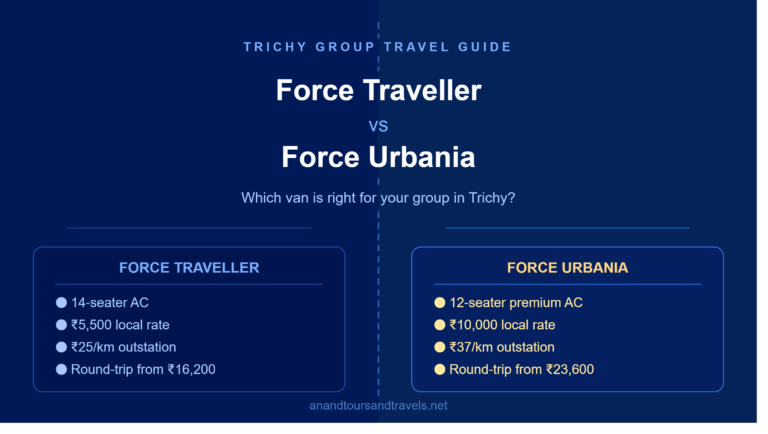
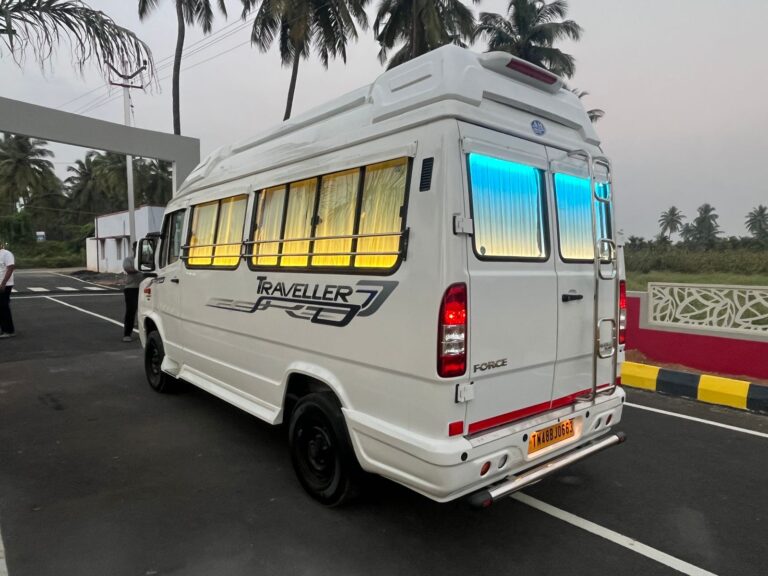
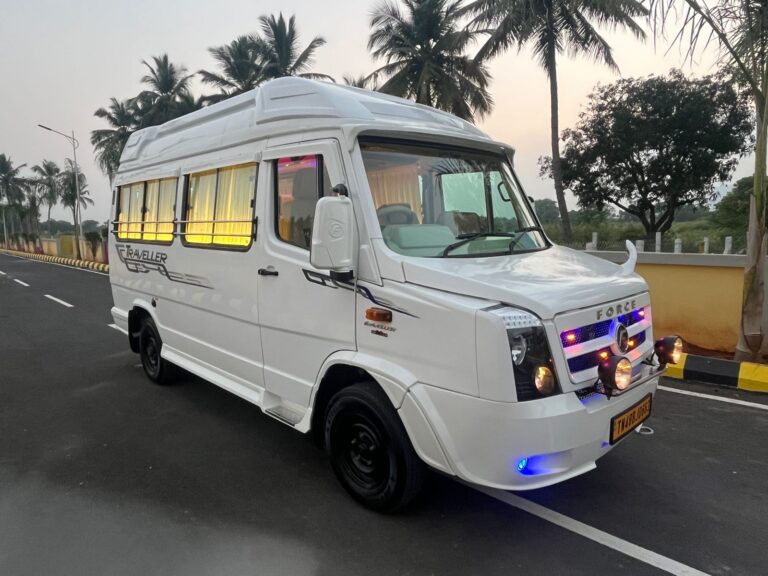
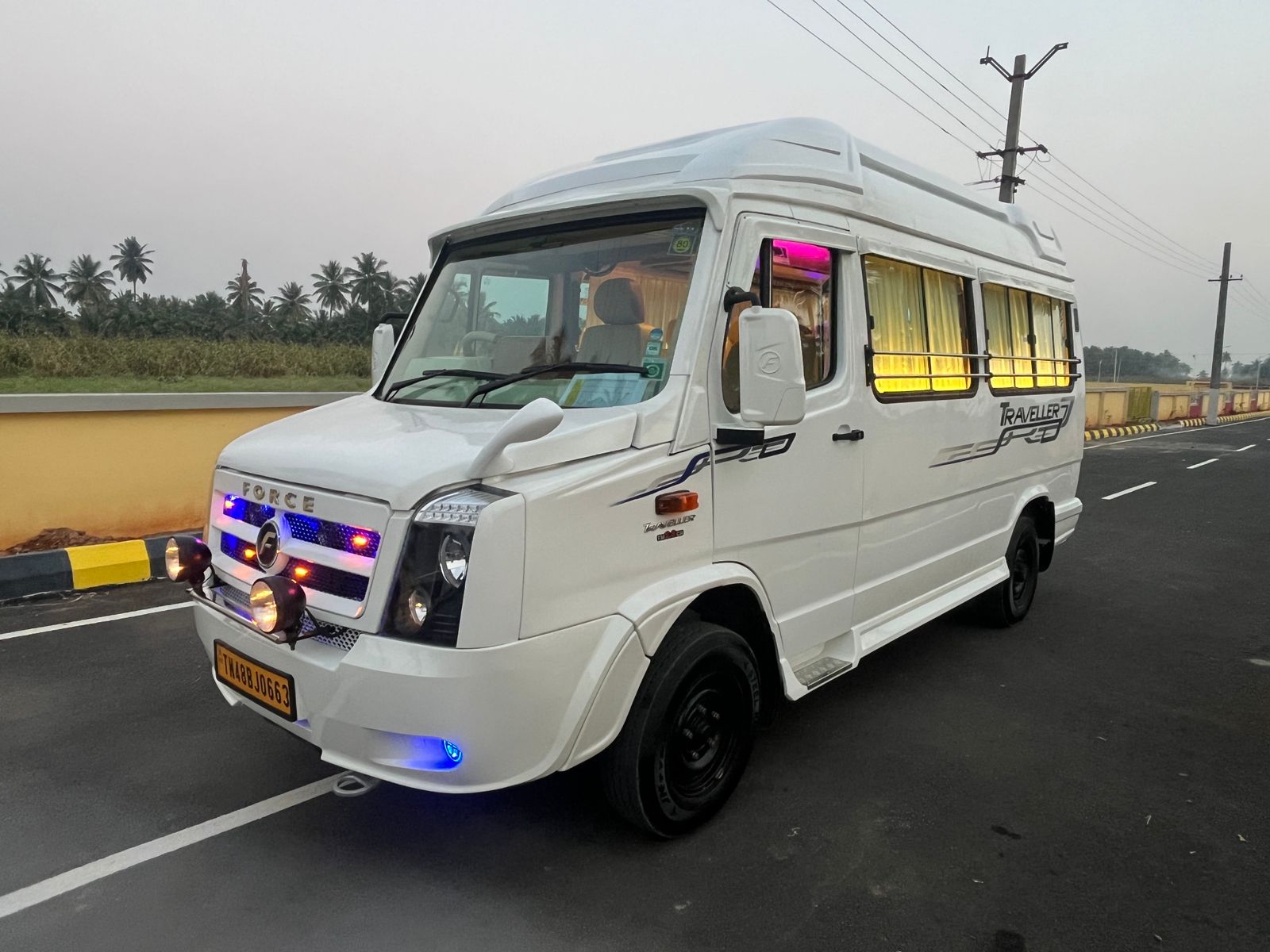
- Best vehicle: 14-seater Force Traveller — lighter and narrower than 18-seater
- State permit: Not required — Kodaikanal is within Tamil Nadu
- Difficulty rating: Moderate-High — manageable with experienced driver, challenging for first-timers
Mettupalayam to Ooty Ghat — the Ooty approach
The Mettupalayam to Ooty Ghat road is the more famous of the two — 36 hairpin bends across 36 km, a number so exact it has become the route’s signature. The gradient is steep, the road is narrow in sections, and the famous Nilgiri Mountain Railway runs alongside parts of the ascent. On busy weekends the road can be congested at the hairpin sections where larger vehicles need extended space to complete their turns.
The Ooty Ghat is more consistently maintained than the Batlagundu Ghat but it is also busier — more tourist traffic, more commercial vehicles, and the occasional vehicle attempting the ascent that should not be on a Ghat road at all. For a 14-seater tempo traveller with an experienced driver, the Mettupalayam Ghat is well within capability. The 36 hairpins sound daunting but at the right pace and with the right driver, they are the most scenic part of the journey.
- Length of Ghat section: ~36 km from Mettupalayam to Ooty
- Hairpin bends: 36 numbered hairpin bends — the route’s defining feature
- Altitude gain: ~1,900 metres over 36 km
- Road width: Generally better than Batlagundu but busy on weekends
- Best vehicle: 14-seater preferred — manageable in 18-seater with experienced driver
- State permit: Required — Nilgiris district commercial vehicle permit
- Difficulty rating: Moderate — 36 named hairpins but road is generally well-maintained
14-Seater vs 18-Seater on Ghat Roads — Why Size Matters
Both the 14-seater and 18-seater Force Traveller can handle both Ghat roads. But the difference in handling between them on a tight mountain hairpin is not small. The 18-seater is roughly 600 to 800 mm longer and 150 to 200 mm wider than the 14-seater. On a straight highway that difference is irrelevant. On a hairpin bend where the vehicle needs to sweep a wide arc on a narrow road — it matters significantly.
The 14-seater can complete most hairpin bends in a single smooth arc. The 18-seater needs more room to complete the same bend — on the tighter hairpins this can mean a two-point manoeuvre where the driver reverses slightly to complete the turn. An experienced driver manages this confidently. An inexperienced driver on an unfamiliar Ghat finds it extremely stressful. The 14 Seater vs 18 Seater Tempo Traveller comparison covers the full picture — for Ghat roads, the 14-seater is always the recommended choice if your group size allows.
| Factor | 14-Seater on Ghat | 18-Seater on Ghat |
| Hairpin handling | Completes most bends in single arc | Needs more room — two-point manoeuvre on tighter bends |
| Road width requirement | Narrower — more margin on single-lane sections | Wider — needs more road space on tight sections |
| Brake load | Lower — lighter vehicle | Higher — heavier vehicle, harder on brakes on descent |
| Manoeuvrability | Excellent | Good with experienced Ghat driver |
| Recommended for Kodaikanal | First choice | Only if group is 15 to 18 passengers |
| Recommended for Ooty | First choice | Manageable — experienced Ghat driver essential |
The Driver — The Most Important Factor of All
If you take one thing from this guide, it is this: the driver’s Ghat experience is more important than any other factor in a hill station tempo traveller booking. More important than the vehicle variant. More important than the season. More important than the time of day.
A Ghat-experienced driver knows exactly where to position the vehicle on each hairpin before starting the turn. They know where the passing bays are and how to read oncoming traffic to decide when to hold and when to go. They know the braking points on the descent. They know the sections where the road surface gets rough after rain. They have done this dozens or hundreds of times and every decision on the road is instinctive rather than calculated.
A driver making this ascent for the first time is calculating all of this from scratch, at altitude, on a steep gradient, with 12 to 14 passengers in the vehicle. The risk is real — not theoretical. When you call to book a Ghat road tempo traveller, the single most important question you can ask is:
📌 ‘Has the driver you are assigning specifically done this Ghat road — Batlagundu to Kodaikanal, or Mettupalayam to Ooty — before?’ A reputable operator will confirm this immediately. At Anand Tours & Travels Trichy, Ghat-experienced drivers are confirmed at booking for every Kodaikanal and Ooty trip.
Before You Leave Trichy — Vehicle Check Points
A pre-trip vehicle check matters on every outstation journey. For Ghat road trips it is non-negotiable. Here is what should be confirmed before any hill station departure:
Brakes — the most critical item
The descent on a Ghat road is significantly harder on brakes than the ascent. Engine braking in low gear is used throughout the descent, but the service brakes are in constant use. Worn brake pads or low brake fluid on a Ghat descent is not just an inconvenience — it is a safety emergency. Ask your operator directly: ‘Has the vehicle been brake-checked before this trip?’ At Anand Tours & Travels Trichy, a pre-trip brake check is part of the standard departure procedure for all Ghat road bookings.
Tyres — condition and pressure
Tyre condition matters on the Ghat for two reasons. First, the constant gradient stresses the tyres differently from highway driving. Second, if a tyre blows on a narrow Ghat section there is limited room to safely pull over. Good tread depth and correct pressure before departure is essential.
Engine cooling
Sustained low-gear climbing on a steep gradient stresses the engine cooling system. A well-maintained vehicle handles this without issue — engines in tempo travellers are designed for exactly this kind of use. But an overheating vehicle on a Ghat road with no easy stopping point is a serious problem. Confirm the vehicle has been serviced recently before a Ghat road booking.
AC functionality
Less critical for safety but important for passenger comfort. The AC in a tempo traveller can struggle on steep extended climbs because the engine load is very high. On the ascent, the AC may be less effective than on the highway. This is normal — once at altitude and driving on flatter Kodaikanal or Ooty roads, the AC returns to full function.
Timing — When to Do the Ghat Ascent and Descent
The time of day you start the Ghat section makes a significant difference to the experience. Here is the practical guide:
Best time for Ghat ascent
- 6 AM to 10 AM: Best window — good visibility, lighter traffic, cooler temperatures, road surface dry from the previous night
- 10 AM to 12 PM: Still good — some traffic building but manageable
- 12 PM to 3 PM: Acceptable in dry season — midday heat but road is dry
- 3 PM to 6 PM: Avoid if possible — afternoon mist starts building at higher elevations on both Ghats, reducing visibility
- After 6 PM: Do not start the Ghat ascent after dark — narrow Ghat road at night with oncoming headlights is difficult even for experienced drivers
Best time for Ghat descent
- Morning (6 AM to 10 AM): Best — good visibility, dry road, light traffic
- Midday: Fine in dry season
- Afternoon: Mist can be heavy — particularly on Kodaikanal’s upper Ghat sections
- After rain: Extra caution regardless of time — wet road on steep gradient needs more braking distance
💡 For a 2-night Kodaikanal trip from Trichy — depart Trichy at 6 AM, reach Batlagundu by 9 AM, start the Ghat ascent at 9 to 9:30 AM. For the return, depart Kodaikanal by 10 AM to complete the descent before afternoon mist builds. This timing plan works perfectly for both the Batlagundu and Mettupalayam Ghats.
Monsoon Season — The One Window to Avoid
Both the Batlagundu Ghat and the Mettupalayam Ghat are significantly more dangerous during the monsoon season (July to September). Here is what the monsoon does to these roads:
- Road surface: Wet granite and tarmac significantly reduces tyre grip on steep gradients
- Visibility: Monsoon mist on both Ghats can reduce visibility to 10 to 20 metres at higher elevations — headlights help but a hairpin bend appears out of the mist with almost no warning
- Landslides: Both Ghats see occasional road debris and minor landslips during heavy rain — delays and diversions are possible
- Waterfalls across road: On Batlagundu Ghat specifically, seasonal waterfalls cross the road during peak monsoon — the road becomes wet and slippery even between rain showers
⚠️ If your hill station trip falls in July, August, or September — consider rescheduling to October or later. The Ghats in monsoon with an experienced driver and good vehicle are manageable, but the risk margin is significantly lower. If you do travel in monsoon, book only with an operator who can confirm that specific driver has done that specific Ghat in wet conditions before.
Ghat Road Comparison — Kodaikanal vs Ooty
| Factor | Kodaikanal (Batlagundu Ghat) | Ooty (Mettupalayam Ghat) |
| Ghat length | ~40 km | ~36 km |
| Hairpin bends | Multiple — no official count | 36 numbered hairpins |
| Steepness | Steeper in upper sections | Consistently steep throughout |
| Road width | Narrower in sections | Generally slightly better |
| Traffic volume | Moderate | Higher — more tourist traffic |
| State permit needed | No | Yes — Nilgiris district |
| Distance from Trichy | ~160 km | ~220 km |
| Best vehicle | 14-seater strongly preferred | 14-seater preferred |
| Monsoon risk | High — waterfalls cross road | High — mist and wet road |
| Best travel season | October to June | December to June |
| Round-trip fare (14-seater) | ~₹16,200 | ~₹16,200 |
Other Ghat Roads from Trichy — Quick Reference
Kodaikanal and Ooty are the most popular but not the only Ghat roads accessible from Trichy. Here is a quick reference for other hill station routes:
| Destination | Ghat road | Length | Difficulty | State permit | Notes |
| Yercaud | Salem to Yercaud | ~30 km | Low — gentler than Kodaikanal or Ooty | No | Good first Ghat road trip for families |
| Valparai | Pollachi to Valparai | ~64 km | High — ~40 hairpins | No | Experienced Ghat driver essential |
| Munnar | Bodinayakanur to Munnar | ~55 km | Moderate | Yes — Kerala | Scenic but narrow in sections |
| Kodaikanal | Batlagundu Ghat | ~40 km | Moderate-High | No | Most booked from Trichy |
| Ooty | Mettupalayam Ghat | ~36 km | Moderate | Yes — Nilgiris | 36 hairpins — experienced driver essential |
What to Ask Your Operator Before Booking a Ghat Road Trip
This is the checklist we recommend for any hill station tempo traveller booking from Trichy:
- Driver experience: ‘Has this specific driver done the Batlagundu/Mettupalayam Ghat road before, and how recently?’
- Brake check: ‘Has the vehicle been brake-checked before this trip?’
- Tyre condition: ‘Are the tyres in good condition with adequate tread depth?’
- State permit: ‘Is the Nilgiris/Kerala permit included in the quote for Ooty/Munnar?’
- Departure time: ‘What time will we reach Batlagundu/Mettupalayam to start the Ghat ascent?’
- Season check: ‘Is there anything specific about this route in the current season I should know?’
At Anand Tours & Travels Trichy, all Ghat road bookings include a confirmed Ghat-experienced driver, pre-trip brake and tyre check, and a clear departure time plan so the ascent happens in the right conditions. For the full vehicle options and the tempo traveller rent per km Trichy rate breakdown for Kodaikanal and Ooty routes, both pages have the complete information.
How Many People Can Safely Travel on a Ghat Road in a Tempo Traveller?
The legal seating capacity of the vehicle is the correct answer — 14 for the 14-seater, 18 for the 18-seater. But there is a practical consideration for Ghat road trips that does not apply to flat highway routes: luggage. For a 2 to 3 night hill station trip with full bags, 14 people in a 14-seater with all their luggage in the boot is tighter than the same group on a Rameswaram day trip with just temple offerings. For longer hill station trips the how many seats in a tempo traveller guide covers the practical comfortable capacity including luggage allowance for multi-day trips.
The Bottom Line
A tempo traveller absolutely can handle Ghat roads to Kodaikanal and Ooty — thousands of group trips from Trichy are made safely on both these routes every year. The vehicle is designed for exactly this use. The conditions that make it safe are:
- A driver with specific experience on that Ghat road
- A 14-seater Force Traveller where group size allows
- A morning ascent — before afternoon mist builds
- A pre-trip brake and tyre check
- Travel outside the July to September monsoon season
Get all five right and the Ghat section is the most scenic and memorable part of the journey. Miss any one of them and the risk profile changes significantly. Book your tempo traveller in Trichy for Kodaikanal or Ooty with Anand Tours & Travels Trichy on +91 97159 78533 — Ghat-experienced driver, pre-trip vehicle check, and departure timing confirmed on the booking call.